
Measuring ATP-CP Capacity
Resource Page on Measuring ATP-CP Capacity with Tim Egerton
Measuring ATP-CP Capacity
INTRODUCTION
Increasing the ability to perform repeated muscular actions for an extended duration of time is a goal of many training programs. Endurance performance is largely explained by three key factors: aerobic capacity, lactate threshold, and work economy. A great deal of research has therefore been devoted to the study of changes in measures in these areas in response to different interventions. However, anaerobic components of fitness can also provide a large contribution to endurance performance. Collectively, these components of fitness are often referred to as anaerobic capacity. The term anaerobic capacity encompasses the capacity of the ATP-CP system and the capacity of the glycolytic energy system.
The ATP-CP system is a simple energy system that functions to maintain Adenosine Triphosphate (ATP) levels. The glycolytic system produces energy through glycolysis, which is the breakdown of glucose to pyruvic acid. When insufficient oxygen is available, anaerobic glycolysis only partially metabolizes glucose, resulting in the production of other metabolites such as lactate. Exercise scientists have developed many ways of measuring these variables and each has strengths and weaknesses, as well as different degrees of accuracy.
What does this page provide on Measuring ATP-CP Capacity?
This page explains what methods for studying ATP-CP capacity are available, when they are used, why they are used, and how accurate they are. By the end, you will be able to critically appraise studies investigating these areas and understand their individual strengths and weaknesses.
Identifying key concepts - Measuring ATP-CP Capacity
The following terms and concepts are key for an understanding of how ATP-CP capacity has been measured:
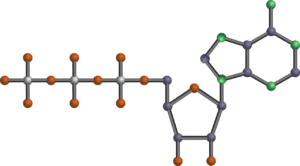
1. Adenosine Tri-Phosphate (ATP) – this is a high-energy phosphate compound from which the body derives energy.
2. Creatine Phosphate (CP) – this is a high-energy compound that, by maintaining ATP concentration, plays an important role in the provision of energy for muscle contraction.
3. Excess Post-Exercise Oxygen Consumption (EPOC) – this is the increase in oxygen utilization above resting levels that occurs after exercise in order to erase the body’s oxygen deficit.
4. Glycolytic system – this is a system of producing energy through glycolysis.
MEASURING ATP-CP CAPACITY
The ATP-CP system is a simple energy system that functions to maintain ATP levels. The glycolytic system produces energy through glycolysis, which is the breakdown of glucose to pyruvic acid. It is possible to ascribe portions of anaerobic contribution during exercise to either the ATP-CP system or glycolytic system (Smith & Hill, 1991). This is usually done through interpretation of the measurement of Excess Post-Exercise Oxygen Consumption (EPOC). EPOC is the increase in oxygen utilization above resting levels that occurs after exercise. Following the cessation of exercise, oxygen consumption does not immediately return to resting levels. Instead a gradual decrease is seen. However, there is a fast component and a slow component to this decrease in post exercise oxygen consumption.
The initial fast component is commonly believed to represent the energy needed to replenish ATP and CP stores. The slow component is commonly believed to represent the energy needed to clear lactate and other metabolites produced by glycolytic metabolism. As such the contribution of the ATP-CP system during exercise has been estimated on the basis of the fast component of EPOC (Artiolo et al., 2012; Beneke et al., 2002; Beneke et al., 2004; Bertuzzi et al., 2007). However, this may be an oversimplification.
During the early phase of a bout of exercise, presumably in order to maximise the rate at which oxygen uptake increases up to the required level, some oxygen is borrowed from stores in haemoglobin and myoglobin. This must be replenished following the cessation of exercise. However, the replenishment of haemoglobin and myoglobin oxygen stores is not accounted for in the simplistic explanation of EPOC that attributes the fast component to the replenishment of ATP and CP stores and slow component to the clearance of bi-products from glycolytic metabolism.
Maximal Accumulated Oxygen Deficit (MAOD)
Recall that Maximal Accumulated Oxygen Deficit (MAOD) is thought to be one of the best measures of anaerobic capacity. In this case, anaerobic capacity is the result of the combined capacity of the ATP-CP and glycolytic energy systems. However, the validity and reliability of this method of measuring anaerobic capacity is questionable (Noordhof et al., 2010). Indeed, in consideration of the known difficulties associated with measurement of the glycolytic system, combined with the comparative lack of research into measurement of the ATP-CP system, it seems difficult to place a large amount of confidence in the ability to accurately estimate the capacity of the ATP-CP system on the basis of excess post exercise oxygen consumption.
Intramuscular ATP and phosphocreatine stores
An area of interest for future research might be the measurement of intramuscular ATP and creatine phosphate stores. Previous research has looked at intramuscular stores of these high-energy phosphate compounds in individuals with neuromuscular disease (Tarnopolsky & Parise, 1999). These measurements were taken using Magnetic Resonance Imaging. There may be scope in investigation into how use of this measurement technology can help provide estimations of the capacity of the ATP-CP energy system.
Increased levels of intramuscular creatine phosphate in response to short-term creatine supplementation have been measured using nuclear magnetic resonance spectroscopy (Rawson et al., 2002). It has been postulated that such acute increases in creatine phosphate levels may result in an increase in the energy providing capacity of the ATP-CP system (Dalbo et al., 2009). If this can be verified, then it may be possible to provide estimations for the capacity of the ATP-CP system from measurements of intramuscular stores of high-energy phosphate compounds.
References - Measuring ATP-CP Capacity
- Artiolo, G. G., Bertuzzi, R. C., Roschel, H., Mendes, S. H., Lancha, A. H. & Franchini, E. (2012). ‘Determining the contribution of the energy systems during exercise’. Journal of Visualized Experiments, 61, e3413.
2. Beneke, R., Pollmann, C. & Bleif, I.. (2002). ‘How anaerobic is the Wingate anaerobic test for humans’. European Journal of Applied Physiology, 87, pp. 388-92
3. Beneke, R., Beyer, T. & Jachner, C. (2004). ‘Energetics of karate kumite’. European Journal of Applied Physiology, 92, pp. 518-23
4. Bertuzzi, R. C. D., Franchini, E., Kokubun, E. (2007). ‘Energy system contributions in indoor rock climbing’. European Journal of Applied Physiology, 101, pp. 293-300
5. Dalbo, V. J., Roberts, M. D., Lockwood, C. M., Tucker, P. S., Kreider, R. B., Kercksick, C. M. (2009). ‘The effects of age on skeletal muscle and the phosphocreatine energy system: can creatine supplementation help older adults’. Dynamic Medicine, 8, pp. 6
6. Noordhof, D. A., de Koning, J. J. & Foster, C. (2010). ‘The maximal accumulated oxygen deficit method: a valid and reliable measure of anaerobic capacity?’. Sports Medicine, 40 (4), pp. 285-302
7. Rawson, E. S., Clarkson, P. M., Price, T. B., Miles, M. P. (2002). ‘Differential response of muscle Phosphocreatine to creatine supplementation in young and old subjects’. Acta Physiologica Scandinavica, 174, pp. 57-65
8. Smith, J. C. and Hill, D. W. (1991). ‘Contribution of energy systems during a Wingate power test’. British Journal of Sports Medicine, 25 (4), pp. 196-9
9. Tarnopolsky, M. A. and Parise, G. (1999). ‘Direct measurement of high-energy phosphate compounds in patients with neuromuscular disease’. Muscle and Nerve, 22 (9), pp. 1228-33
Foxwood Personal Training in York
This resource page on measuring ATP-CP Capacity was written by Tim Egerton whilst working on a previous project. It is unlikely that additional resource pages will be written on this topic area. This is because my focus is now on Foxwood Personal Training. As part of Foxwood Personal Training, I have three primary services. You can find out more about each of these services by following the links below:
If you have any questions about any of these services, you can get in touch in two ways. Firstly, you can use the email enquiry form on the homepage of this website. Alternatively, you can get in touch via DM on the Foxwood Personal Training Instagram Page.
Please also feel free to get in touch regarding this resource page on measuring ATP-CP capacity. Even though I do not plan to add more to this resource page, I am always happy to hear from people that have found it to be a useful resource.
Additional Resources
You may also be intersted in more recent resources that I have produced. SInce my focus has been on Foxwood Personal Training, I have developed a York Personal Training blog.:
Although I am not creating Sports Science resources on this blog, there is a wealth of information. There is a heavy emphasis on Strength and Conditioning content. In particular, I am focused on Strength Training for Runners. This is my area of specialism. However, there is also scientific content pertaining to the benefits of sport massage. There is also general fitness training advice. In short, there is a wealth of information for a range of interests. I am also happy to consider requests for new topics to be covered.
Whilst the lab based physiology pages have ran their course, I am still happy to write scientific fitness content. So, again, make sure to get in touch. If I can accomodate your request, then I will. Do, however, bear in mind my areas of specialism. I CAN write on a more diverse range of subjects, but it may not be my best work. As I always aim to produce my best possible work, this means any topic requests should currently pertain to Strength and Conditioning for Runners. This could be performance based content or it could be injury prevention content. This are the two focal points of S&C for runners, and so it makes sense to focus on these two areas.
This still leaves plenty of scope for topic ideas. Such topics may include plyometrics, power training or even eccentric strength training for runners. Alternatively, we could cover flexibility training or recovery methods for runners. These are just a few examples, and I encourage you to get in touch with your own ideas.